

Hey there, I’m Emily — a self-taught home cook and gluten-free recipe tinkerer. When I first had to give up gluten, cookie dough was one of the hardest things to say goodbye to. I missed sneaking a bite straight from the bowl more than I’d like to admit. So I made it my mission to create a version that’s safe, quick, and just as satisfying. After lots of trial (and plenty of error), this is the one my family keeps asking for. No eggs, no oven, and four crave-worthy flavors you’ll want to try right away.
This gluten free edible cookie dough is everything you love about the classic, without any of the risks. It’s egg-free, made with heat-treated flour, and comes together in minutes. Whether you enjoy it solo, share it with friends, or turn it into something fun, you’ll get safe, delicious dough every time.
Table of Contents
Table of Contents
Why You’ll Fall in Love with This Recipe
This isn’t just another cookie dough recipe. It’s designed to be your one-and-only, go-to treat because it’s:
- 100 percent Safe and Worry-Free: Enjoy every bite thanks to zero eggs and heat-treated flour
- Ready in Under 10 Minutes: Perfect for those sudden cravings
- Incredibly Versatile: With four amazing flavors included, you’ll never get bored
- Foolproof and Smooth: My expert tips guarantee that creamy, melt-in-your-mouth texture every time
- Made for Everyone: Easily adapts to be dairy-free or vegan
A Look at the Key Ingredients
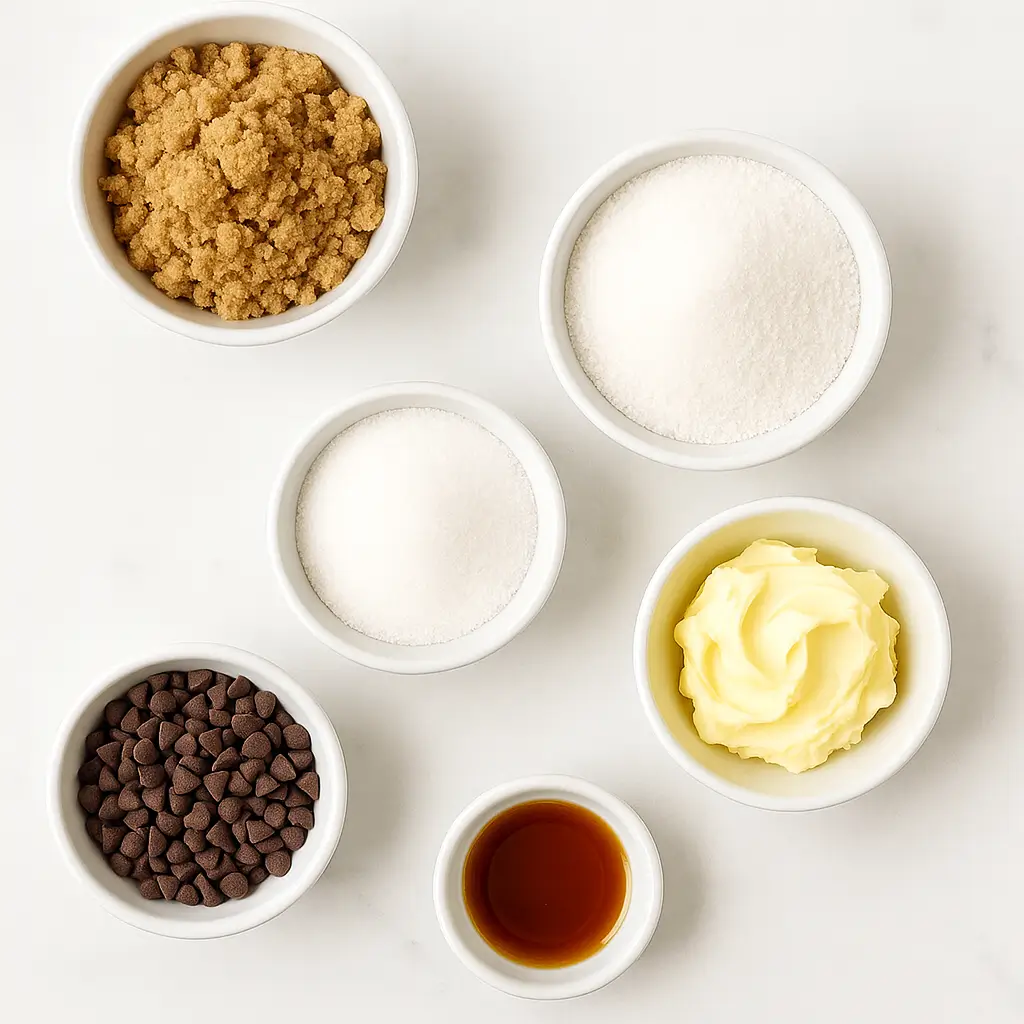
Creating the perfect edible cookie dough starts with the right ingredients. Here’s why each one matters and how they work together for the best taste and texture.
Gluten-Free Flour
Use a 1 to 1 gluten-free blend for the closest match to traditional flour. These blends often contain xanthan gum, which helps mimic the chewiness of regular dough. It’s important to heat-treat the flour before adding it to the mix, which makes it safe to eat raw.
Butter
Softened butter is key to a smooth dough. It blends easily with sugar and gives that rich, classic taste. If you need a dairy-free option, go for vegan butter like Earth Balance or similar spreads that keep the texture right without affecting flavor.
Sugars
Combining white and brown sugar gives the best result. Brown sugar adds moisture and depth, while white sugar keeps the flavor sweet and clean. This mix helps achieve that recognizable cookie dough taste that everyone loves.
The Number One Rule for Safe Edible Cookie Dough: Heat-Treating Your Flour
Flour might seem harmless, but when raw, it can carry bacteria that make it unsafe to eat. That’s why heat-treating your gluten-free flour is a non-negotiable step. It only takes a few minutes and ensures your cookie dough is completely safe to enjoy.
Method One: Microwave (Quick and Simple)
- Place the gluten-free flour in a microwave-safe bowl
- Microwave on high for 1 minute
- Stir the flour and check that the temperature reaches at least 165°F
- Let it cool completely before using
Method Two: Oven (More Thorough)
- Preheat your oven to 350°F
- Spread the flour evenly on a baking sheet
- Bake for 5 to 10 minutes, checking often so it doesn’t brown
- Let the flour cool fully before adding it to your recipe
Once cooled, your flour is safe to use. Do not skip this step, as it makes all the difference between a fun treat and a risky one.
How to Make Gluten Free Edible Cookie Dough (Step-by-Step Photos)
Making your own edible cookie dough at home is easy and fast. Follow these simple steps for a smooth, safe-to-eat treat that tastes just like the classic version.
Step 1: Heat-Treat the Flour
Add your gluten-free flour to a microwave-safe bowl. Microwave it for about 1 minute, stirring halfway through. Make sure it reaches 165°F to kill any bacteria. You can also bake it at 350°F for 5 to 10 minutes if you prefer. Let the flour cool completely before moving to the next step.
Step 2: Mix the Base
In a medium bowl, combine softened butter with brown sugar and white sugar. Stir until the texture becomes light and smooth. Add the vanilla extract and mix until fully blended.
Step 3: Add the Dry Ingredients
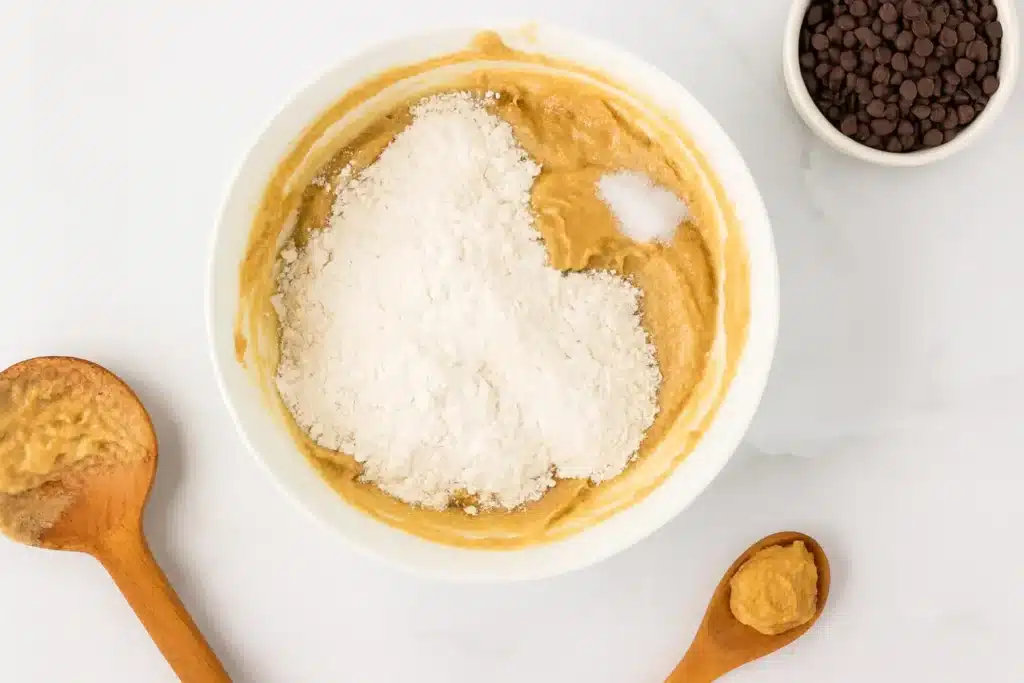
Slowly add the cooled, heat-treated flour and salt to the butter mixture. Stir gently until the dough forms. It should be thick but easy to stir.
Step 4: Fold in the Chocolate Chips
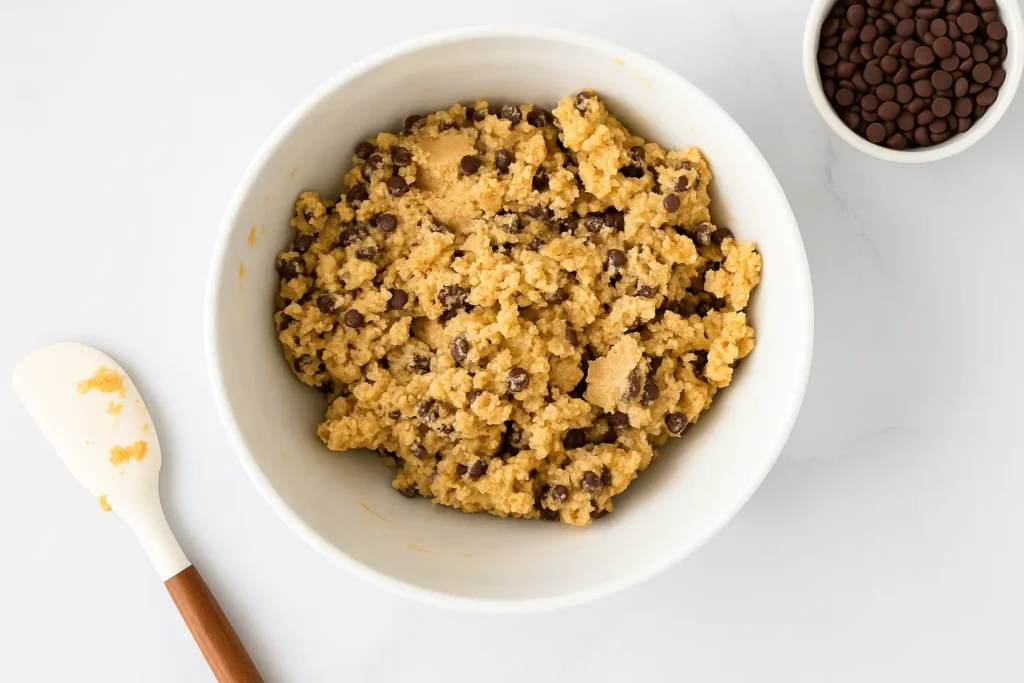
Add the mini chocolate chips and use a spatula to fold them into the dough evenly. Make sure they are spread throughout the mixture.
Step 5: Shape and Chill
Use a small scoop or spoon to form balls of dough. Place them on a tray lined with parchment paper. Chill in the freezer for 20 minutes to firm up the texture.
Step 6: Enjoy
Once firm, your cookie dough is ready to eat. Store leftovers in the refrigerator in an airtight container.
4 Delicious Variations (Beyond Chocolate Chip)
This recipe is great on its own, but it also gives you room to get creative. Try one of these fun flavor twists using simple swaps. Each variation starts with the base recipe and adds a little something extra.
Classic Chocolate Chip
Stick with the original. It has the perfect mix of brown sugar, vanilla, and mini chocolate chips. This is the version most people crave first.
Funfetti Sugar Cookie
Replace the brown sugar with more white sugar for a lighter flavor. Leave out the chocolate chips and mix in colorful sprinkles. It turns into a sweet and playful treat.
Double Chocolate Fudge
Add two tablespoons of unsweetened cocoa powder to the dough. You can also use chocolate chunks instead of chips for a rich and bold twist.
Peanut Butter Chocolate Chip
Stir in two tablespoons of creamy peanut butter before adding the flour. The result is smooth, nutty, and full of flavor. This version pairs perfectly with the chocolate chips.
More Than a Snack: 7 Fun Ways to Enjoy Cookie Dough
This cookie dough does more than satisfy a quick craving. Try these seven fun ways to turn it into something extra special.
Cookie Dough Ice Cream
Mix chunks of dough into softened vanilla ice cream. Refreeze until firm for a fun twist on a classic flavor.
No-Bake Cookie Dough Truffles
Roll the dough into small balls and coat them in melted chocolate. Chill until firm for an easy homemade candy.
Ultimate Brownie Topping
Spread spoonfuls of dough over freshly baked brownies. Let it soften slightly and press it into the surface while warm.
Surprise-Inside Cupcakes
Place a small frozen ball of dough in the center of each cupcake before baking. It creates a sweet surprise in every bite.
Cookie Dough Cake Filling
Use flattened scoops of dough between cake layers. This layer brings a soft bite and deep sweetness.
Cookie Dough Dip
Scoop the dough into a bowl and serve with gluten-free pretzels or fresh apple slices for dipping.Cookie Dough Milkshake
Blend dough chunks with milk and vanilla ice cream for a thick and creamy milkshake.
Pro Tips for Perfect Cookie Dough
Use mini chocolate chips to make sure every bite has a bit of chocolate.
Always use real vanilla extract for the best flavor.
Emily’s Insider Tip
I always chill the dough for 30 minutes before serving. It’s my must-do step. That short rest time deepens the flavor and makes the texture unbelievably smooth. It’s the difference between good and unforgettable.
Troubleshooting Guide: Common Problems and Easy Solutions
Why does my dough feel gritty
Cream the butter and sugars longer until smooth. This helps dissolve the sugar properly.
Why is my dough too dry or crumbly
Add a small amount of milk, one teaspoon at a time, until the texture improves.
Why is my dough too sticky or wet
Chill the dough in the fridge for 15 to 30 minutes. If you used melted butter instead of softened, this step is especially important.Why does my dough have a floury taste
Make sure the flour has completely cooled after heat-treating. If it’s added too soon, it won’t blend well and may leave an odd aftertaste.
Storage and Freezing Guide
In the Fridge
Place any leftover cookie dough in an airtight container. It will stay fresh for up to one week. For best texture, let it sit at room temperature for a few minutes before eating.In the Freezer
Scoop the dough into small balls and lay them on a baking sheet lined with parchment paper. Let the dough harden in the freezer, then move the pieces into an airtight container or freezer-safe bag. They will stay good for about three months. When you’re ready to enjoy, thaw the amount you want in the fridge or let it soften at room temperature.

Gluten Free Edible Cookie Dough (4 Easy Flavors)
Ingredients
Base Dough
- 1 cup gluten-free 1:1 flour blend (heat-treated and cooled)
- 1/2 cup unsalted butter, softened use vegan butter for dairy-free
- 1/4 cup brown sugar light or dark
- 1/4 cup white sugar
- 1 tsp vanilla extract use real vanilla for best flavor
- 1/4 tsp salt
- 1/3 cup mini chocolate chips
Instructions
- Step 1: Heat-treat your gluten-free flour by microwaving it in a microwave-safe bowl for 1 minute, stirring halfway through. Ensure it reaches 165°F. Let it cool completely before using.
- Step 2: In a medium bowl, cream together softened butter, brown sugar, and white sugar until light and smooth.
- Step 3: Stir in the vanilla extract until fully combined.
- Step 4: Add the cooled flour and salt. Mix gently until a dough forms.
- Step 5: Fold in the mini chocolate chips evenly throughout the dough.
- Step 6: Scoop dough into balls and place them on a parchment-lined tray. Chill in the freezer for 20 minutes.
- Step 7: Enjoy! Store any leftovers in an airtight container in the fridge.
Notes
Nutrition
Serving: 1dough ballCalories: 193kcalCarbohydrates: 26gProtein: 1gFat: 10gSaturated Fat: 6gCholesterol: 21mgSodium: 124mgPotassium: 12mgFiber: 1gSugar: 18gVitamin A: 253IUCalcium: 25mgIron: 1mgConclusion
This gluten free edible cookie dough brings together comfort, speed, and flavor in one easy recipe. It’s safe to eat, made with simple ingredients, and easy to customize with fun variations. Whether you’re enjoying it straight from the bowl or turning it into something extra, it delivers every time.If you tried this recipe, leave a comment below and give it a star rating. Your feedback helps others and keeps the recipe growing.
Tried a fun twist or added your own spin? Share it with us.
And don’t forget to save or share this recipe on Pinterest or Facebook so others can enjoy it too.
Frequently Asked Questions
Can I bake this edible cookie dough
No. This recipe does not contain eggs or baking soda, so it will not bake properly like regular cookie dough. It is meant to be enjoyed as-is.
Is it really necessary to heat-treat the flour
Yes. Even gluten-free flour can carry harmful bacteria when raw. Heat-treating removes that risk and makes your dough completely safe to eat.
What is the best gluten-free flour for this recipe
A one-to-one gluten-free blend works best. Look for a mix that contains xanthan gum for better texture and structure. Brands like Pillsbury or Bob’s Red Mill are great options.
Can I make this with a sugar substitute
Yes. You can use alternatives like coconut sugar, monk fruit sweetener, or other baking-approved substitutes. Keep in mind that texture and sweetness may change slightly depending on the brand.