
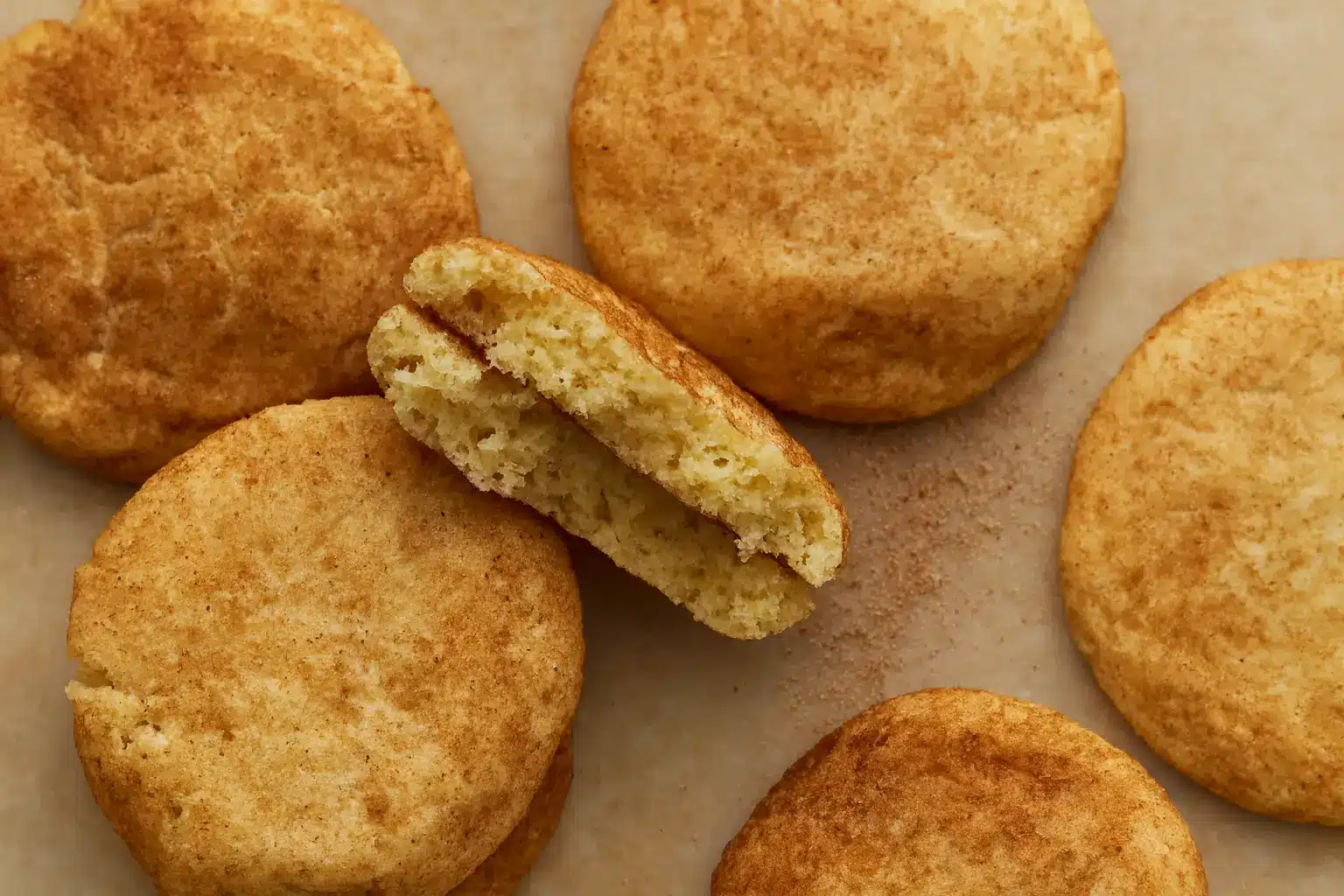
Gluten free snickerdoodle cookies recipe that delivers soft centers, chewy bites, and a golden crackly top. No spreading, no grit, just perfect cookies every time.
The smell of cinnamon sugar alone brings back cozy memories. Maybe it reminds you of baking with someone you love or sneaking a cookie off the cooling rack before dinner. That sweet scent, paired with a soft center and crisp edges, is pure comfort.
But if you’ve ever baked gluten free cookies, you know the struggle. They often turn out flat, gritty, or dry. This recipe solves all of that. You’ll get chewy, thick snickerdoodles with buttery flavor and that classic tang.
What’s the secret? A double-roll in cinnamon sugar for a golden crust, and a short rest to let the dough hydrate. Plus, I’ve included a Texture Matrix below so you can pick exactly how soft or thick you want your snickerdoodles.
Table of Contents
Why This Gluten free snickerdoodle cookies recipe Works
Getting gluten-free cookies right is tricky, but this recipe solves the most common issues without needing special tools or confusing techniques. Here’s why it works so well:
- No Grit
Gluten-free cookies often taste sandy. That’s usually because the flour wasn’t given time to absorb the moisture. Letting the dough rest for 30 minutes solves that. It allows the flour to fully hydrate, which gives you a smoother, softer texture. - Perfect Tang
Snickerdoodles are known for their slight tang, and that comes from cream of tartar. This recipe uses just the right amount to balance flavor and texture without being too sharp. - Customizable Texture
Do you like your cookies thick and puffy or soft and chewy? You get to decide. Chill the dough for thicker cookies or bake right away for flatter, chewier ones. Either way, you’ll end up with cookies that taste as good as they look.
This recipe is built to give you control, consistency, and amazing results every time.
Gluten‑Free Snickerdoodle Cookies
Ingredients
Dough
- 280 g gluten‑free all‑purpose flour blend (with xanthan gum)
- 227 g unsalted butter, softened room temperature
- 225 g granulated sugar
- 2 large eggs
- 1 tsp vanilla extract
- 0.5 tsp cream of tartar
- 0.5 tsp baking soda
- 0.25 tsp salt
Cinnamon‑Sugar Coating
- 50 g granulated sugar (for coating)
- 2 tsp ground cinnamon (for coating)
Instructions
- Preheat your oven to 175 °C (350 °F). Line a baking sheet with parchment paper and set aside.
- In a large bowl, cream together the softened butter and 225 g granulated sugar until light and fluffy. Add the eggs one at a time, mixing well after each addition, then stir in the vanilla extract.
- In a separate bowl, whisk together the 280 g gluten‑free flour blend, cream of tartar, baking soda, and salt until evenly combined.
- Gradually mix the dry ingredients into the wet until just combined. Do not overmix.
- Cover the dough and let it rest for 30 minutes. This allows the gluten‑free flour to hydrate and helps prevent gritty texture.
- While the dough rests, combine 50 g granulated sugar and 2 tsp ground cinnamon in a small bowl to make the coating.
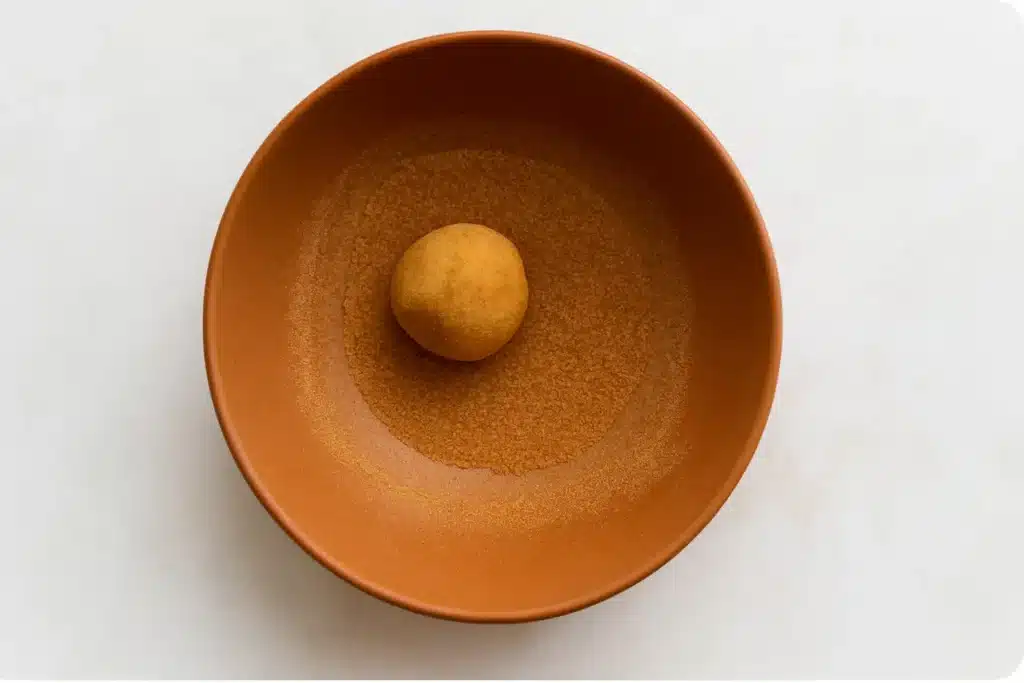
- Scoop the dough into roughly 1.5‑inch (≈3.5 cm) balls. Roll each ball in the cinnamon‑sugar mixture, let sit a minute, then roll again (double‑roll) to build a thick crust.
- Place the dough balls on the lined baking sheet. For a thinner cookie, flatten gently; for a puffy cookie, leave rounded.
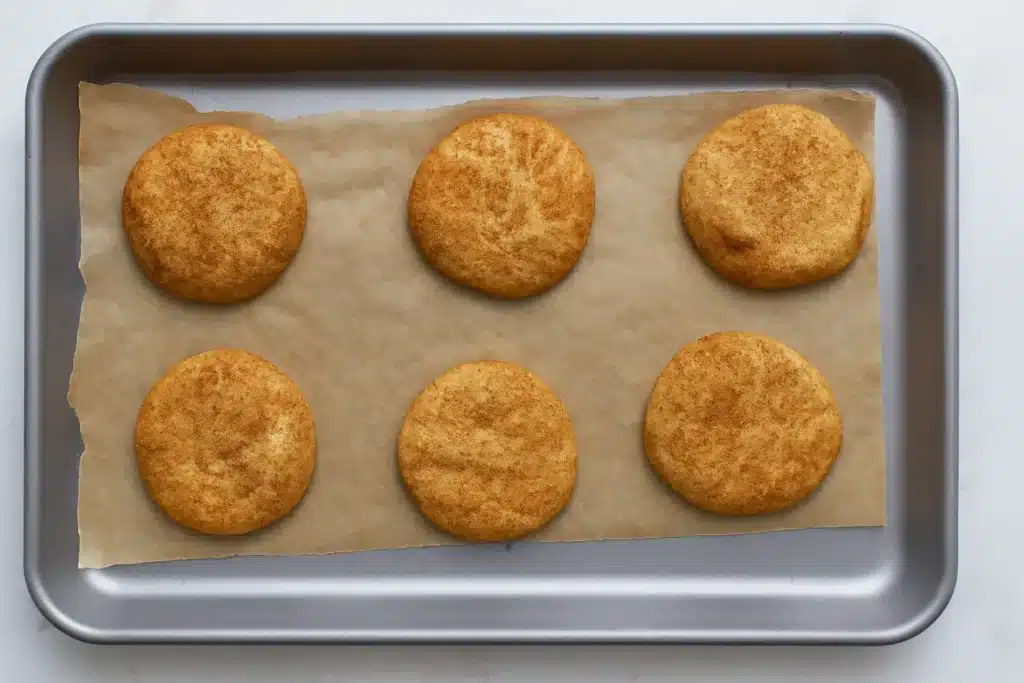
- Bake for about 10 minutes, until the edges are set but centers are still soft. About halfway through baking, gently tap the baking sheet on the counter (pan‑bang) to help the centers sink slightly and encourage a crackly top.
- Allow cookies to cool on the baking sheet for 5–10 minutes before transferring to a wire rack to cool completely.
Notes
Nutrition
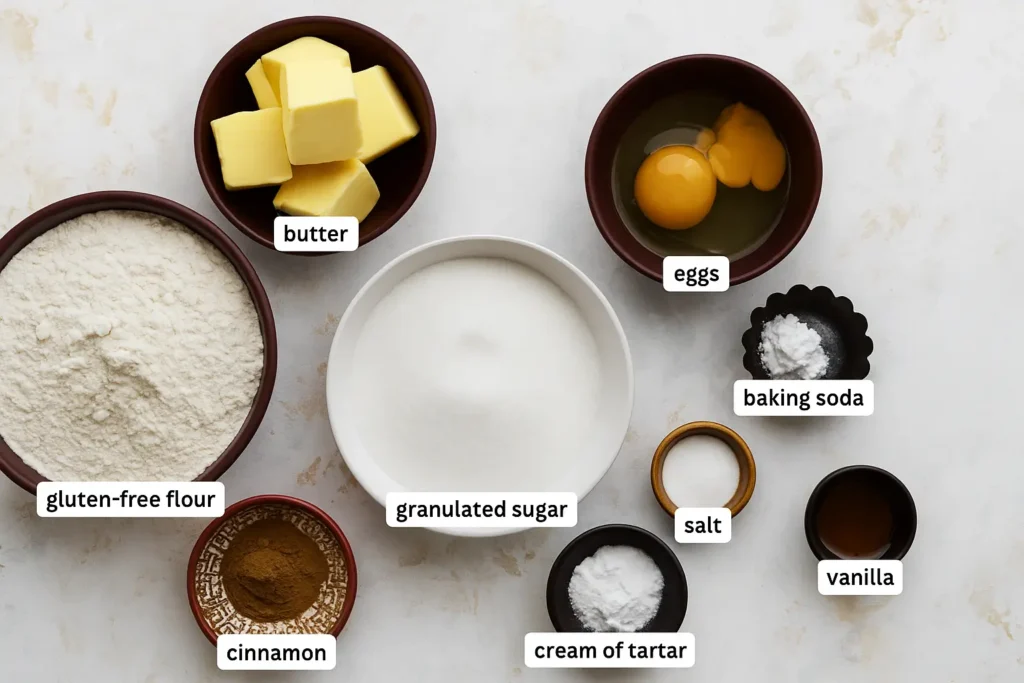
Ingredients and The Science Behind Them
Understanding what each ingredient does will help you get the soft, chewy texture that makes snickerdoodles so loved. These notes explain why each part matters and how it shapes the final cookie.
The Best Gluten Free Flour Blend
Gluten free flour blends are not all the same. Some use more rice flour, while others use starch-heavy mixes. This changes how the dough absorbs moisture and how much the cookies spread.
Reliable options include King Arthur Measure for Measure, Bob’s Red Mill 1 to 1, and Cup4Cup.
We tested with 280 grams of King Arthur Measure for Measure flour. Do not use almond flour or coconut flour as a one to one replacement. They absorb moisture differently and will ruin the texture.
Each of these blends contains xanthan gum, which is important because it gives structure and prevents the cookies from falling apart. If your blend does not have xanthan gum, the dough will spread more and may feel crumbly.
Cream of Tartar and Why It Is Mandatory
Cream of tartar gives snickerdoodles their signature tang and helps create the chewy center. It also reacts with baking soda to form tiny air pockets that give the cookies their crackly top. Without it, the flavor changes and the cookie texture loses its classic snap on the outside.
Butter Versus Shortening
Butter gives the cookies a deep, rich taste that shortening cannot match. The challenge is controlling spread. To keep the cookies thick and soft, let the dough rest before baking. This rest time helps the flour absorb moisture and prevents the butter from melting too quickly in the oven. If you prefer a fluffier cookie, chill the dough longer to help it hold its shape.
Egg Replacement Tips
To make these cookies egg-free, use Bob’s Red Mill Egg Replacer or a flax egg (1 tablespoon ground flaxseed mixed with 3 tablespoons water). Let it rest until thick. Note: flax leaves a speckled appearance but works well.
How to Make Gluten free snickerdoodle cookies recipe Step by Step
These steps guide you through the process so your cookies come out soft in the center with crisp edges and a crackly top.
Step 1: Cream the Butter and Sugar
Use room temperature butter. Beat the butter and sugar until the texture becomes light and fluffy. This traps air and gives the cookies a tender bite.
Step 2: Mix the Dry Ingredients
In a separate bowl, whisk the gluten free flour, cream of tartar, baking soda and salt. Whisking helps prevent clumps and makes the dry mix more even.
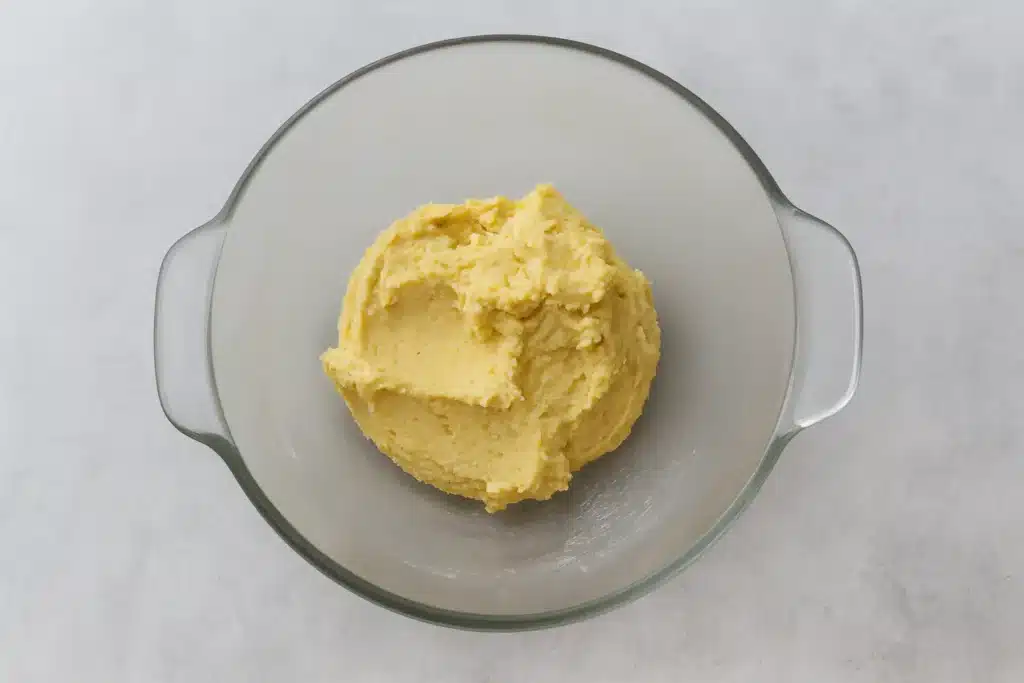
Step 3: Let the Dough Rest
Once the wet and dry ingredients are combined, let the dough sit for about thirty minutes. This rest time helps the rice flour absorb moisture, which removes grit and improves the final texture.
Step 4: Use the Double Roll Technique
Shape the dough into small balls. Roll each ball in the cinnamon sugar mix. Let the dough sit for a few minutes, then roll again. This simple step creates a thicker crust and the crackly top that makes snickerdoodles stand out.
Step 5: Bake with the Pan Bang Method
Arrange the dough on a lined baking sheet. Flatten slightly for thinner cookies or leave round for puffy cookies.
Bake until the edges look set. Halfway through baking, gently tap the baking sheet on the counter. This light shock helps the centers sink a little and encourages more crinkles.
Texture Matrix
Choose your cookie style below based on your mood or preference:
| Texture Goal | What To Do |
|---|---|
| Soft and Puffy | Chill dough 2 hours, do not flatten |
| Thin and Chewy | Bake right away, flatten dough slightly |
| Crackly and Crisp | Use Pan Bang halfway through baking |
| Buttery Rich | Try brown butter, cool before using |
Troubleshooting Table
| Problem | Cause | Fix |
| Cookies spread too much | Warm butter or hot baking sheet | Chill dough for 30 minutes, use cool pans |
| Gritty texture | Dough not rested | Rest dough 30 minutes before baking |
| No crackles on top | Oven too cool | Preheat to full 350°F before baking |
| Cookies dry or hard | Overbaked | Remove while centers still look soft |
Dietary Adaptations Dairy Free and Egg Free
Making these snickerdoodles fit your dietary needs is simple with the right swaps. Here is how to keep the cookies soft and chewy without using dairy or eggs.
Dairy Free
Choose a stick-style vegan butter instead of tubs. Brands like Miyoko’s or Earth Balance sticks work best. Tub butters have more water which can cause spreading and affect texture. Stick butters hold up better during baking and give the right fat content for a rich, buttery taste.
Egg Free
To replace eggs, use a flax egg or Bob’s Red Mill Egg Replacer. A flax egg is made by mixing one tablespoon of ground flaxseed with three tablespoons of water. Let it sit for a few minutes until it thickens. This swap works well for binding the dough but can leave small dark flecks in the cookies. If you prefer a cleaner look, go with a commercial replacer like Bob’s Red Mill.
These simple changes keep the texture close to the original while meeting dairy free or egg free needs. The flavor stays warm and classic with the same chewy bite.
Make Ahead and Freezing Instructions
Planning ahead makes baking easier and helps you always have fresh cookies when needed. These tips show how to store and freeze your dough or baked cookies without losing texture or flavor.
Freezing Dough
Scoop the cookie dough into balls and place them on a baking sheet lined with parchment paper. Freeze the tray for one hour until solid. Then transfer the frozen dough balls to a sealed freezer bag. Label with date and baking instructions. When ready to bake, place frozen dough on a sheet and bake directly. Add two extra minutes to the total baking time. This method keeps your cookies soft inside and slightly crisp outside.
Storing Baked Cookies
Once the cookies have cooled, store them in an airtight container at room temperature. To maintain moisture, place a slice of white bread inside the container. This bread releases moisture slowly, keeping the cookies soft without changing the flavor.
Serving Suggestions
These cookies pair well with a cold glass of milk, hot coffee or even a scoop of vanilla ice cream. Create a dessert board with cinnamon sticks, marshmallows and snickerdoodles. For extra fun, drizzle melted chocolate on top.
Helpful Notes
A few extra tips can push your cookies from good to great. These small details help ensure every batch turns out perfectly.
- Always Measure Ingredients by Weight
Use a kitchen scale to get the most accurate results. Gluten free flours can settle in the bag, which makes volume measuring less reliable. Use too much or too little and it will throw off the entire texture. - Let the Dough Rest
Always let your gluten free dough rest for 30 minutes. This helps create a smooth hydrated consistency and prevents grittiness. - Avoid Warm Baking Sheets
Always use cool pans. If your pan is warm from a previous batch, the cookies will start to melt before baking begins, leading to flat cookies. - Don’t Overbake
These cookies are ready when the edges are firm and the centers are moist. Pull them from the oven while still pale in the center. They will finish on the tray.
These additions may be minor in volume but make a real difference in the final result. Keep them in mind each time you bake.
Conclusion
These Gluten free snickerdoodle cookies recipe check every box. They are soft in the center, crisp at the edges and full of that warm cinnamon sugar flavor. The crackly top and classic tang make them feel like home, and the no-spread dough means your cookies will hold their shape every time.
What makes this recipe stand out is the focus on texture and reliability. With tips like the double roll, optional chill time and a smart rest period, you get control without the guesswork. Whether you are baking for yourself or sharing with friends, these cookies bring comfort in every bite.
If you tried this recipe, leave a comment and add a star rating below. Your feedback helps others and supports this free content.
Tried a twist on the classic? Maybe added brown butter or went vegan? Share your version in the comments. We’d love to hear what you did. And if you loved it, don’t forget to share it on Pinterest.
Frequently Asked Questions
These are the most common questions about making Gluten free snickerdoodle cookies recipe. Each answer helps you get better results and avoid common baking mistakes.
Can I substitute cream of tartar?
Yes, you can use baking powder if you do not have cream of tartar. However, the flavor will be slightly different and less tangy. For this recipe, replace both the cream of tartar and baking soda with two teaspoons of baking powder.
Can I use almond flour?
Not for this recipe. Almond flour does not behave the same way as a gluten free all purpose blend. Using it as a one to one swap will cause spreading and a greasy texture.
Why do I need to measure in grams?
Grams give more accuracy than cups. Gluten free flour blends vary in density. Using a scale ensures each batch turns out the same with the right structure and moisture.
What flour is best for gluten free cookies?
Use a tested blend like Cup4Cup, King Arthur Measure for Measure or Bob’s Red Mill 1 to 1. These blends include xanthan gum and give consistent results.
What is the secret to soft snickerdoodles?
Letting the dough rest is key. It allows the flour to fully absorb the moisture. Also, try the double roll method for extra texture and the right balance of crisp and chew.
Do I need to add xanthan gum to gluten free flour?
If your flour blend does not contain xanthan gum, you should add it. It helps hold the cookies together and prevents crumbling.
What are common snickerdoodle baking mistakes?
Using warm butter, skipping the rest period and baking too long are the most common errors. Follow the steps closely and refer to the troubleshooting table above to fix issues fast.
What is the trick to baking with gluten free flour?
Let the dough rest before baking. This improves texture and removes grit. Also, always use cool pans and accurate measurements for the best outcome.